
Understanding Heated Water Cups from an Engineer’s Perspective — Part 2
Every cup tells a story; every moment holds warmth. Hello everyone, welcome to "Dong Dong's Cup Talk". With years of experience in this industry, I recall that portable heated water cups first appeared around 2016. https://www.zhanyict.com/en/ProductsDetail-VB-10521.htmlAfter several years of market cultivation, the heated water cup market entered a period of rapid growth in 2020 and saw explosive development in 2022. Although market popularity has declined slightly in the past two years, many brands are still developing such products. Today, I invite Engineer Li from our factory, who has been responsible for the development of heated cups since 2016, to explain how heated water cups work.
I am a senior engineer with more than 20 years of experience in designing small household appliances, specializing in heated insulated cups. https://www.zhanyict.com/en/ProductsDetail-VB-10521.htmlBelow, I will conduct an in-depth analysis covering technical parameters, structural design, potential safety hazards, service life, and practical cases.
II. In-depth Analysis of Key Technical Parameters
1. Heating Power and Efficiency
Power Range
• Wired models: 300W–500W (mainstream); some commercial models reach 800W.
• Rechargeable models: 100W–200W, https://www.zhanyict.com/en/ProductsDetail-VB-10521.htmllimited by the battery discharge rate.
Efficiency Differences
• Single bottom heating ring: Heat concentrates in the center, resulting in uneven water temperature. https://www.zhanyict.com/en/ProductsDetail-VB-10521.htmlThermal efficiency: 75%–80%.
• Dual bottom heating rings: Larger coverage and more even water temperature. Thermal efficiency rises to 85%–90%, but with a more complex structure and higher cost.
Market Case: Brand A once launched a 500W wired model advertised as "boils water in 10 minutes". https://www.zhanyict.com/en/ProductsDetail-VB-10521.htmlHowever, the excessive power caused circuit tripping due to overloaded sockets for some users, so the power was later reduced to 350W.
2. Balance Between Capacity and Structure
Mainstream Capacity: 300ml–500ml (balancing portability and heating efficiency). Capacities over 600ml greatly prolong heating time and raise the center of gravity, https://www.zhanyict.com/en/ProductsDetail-VB-10521.htmlmaking the cup prone to tipping over.
Structural Conflicts
• The larger the capacity, the smaller the contact ratio between the bottom heating plate and water, reducing heating efficiency.
• To ensure structural strength, https://www.zhanyict.com/en/ProductsDetail-VB-10521.htmlthicker cup walls further reduce heat conduction, leading to "hot outside, cold inside".
User Pain Point: Large-capacity cups often have uneven heating—boiling at the bottom but lukewarm at the top—resulting in poor user experience.
3. Bottom Heating Plate Technology
Material Types
• Stainless steel heating plates: Low cost, corrosion-resistant, but slow to heat up and prone to limescale buildup.
• Ceramic heating plates: Fast heating, https://www.zhanyict.com/en/ProductsDetail-VB-10521.htmlhigh temperature resistance, less limescale, but brittle and poor in impact resistance.
• Thick-film heating plates: The highest thermal efficiency (≥90%), compact in size. They are the mainstream choice for mid-to-high-end models, featuring complex craftsmanship and higher prices.
Single Ring vs. Dual Ring
• Single ring: Simple structure and low cost, suitable for small-capacity cups, but causes uneven heating.
• Dual ring: More uniform heat distribution, https://www.zhanyict.com/en/ProductsDetail-VB-10521.htmlavoiding local overheating. Ideal for large-capacity cups or scenarios requiring stable water temperature. However, it increases sealing difficulty and slightly raises the risk of water leakage.
Failure Case: Brand B’s models with ceramic heating plates were recalled (12,000 units) after internal cracks formed from bumps during transportation. https://www.zhanyict.com/en/ProductsDetail-VB-10521.htmlThis led to electric leakage and burnout from dry heating during use.
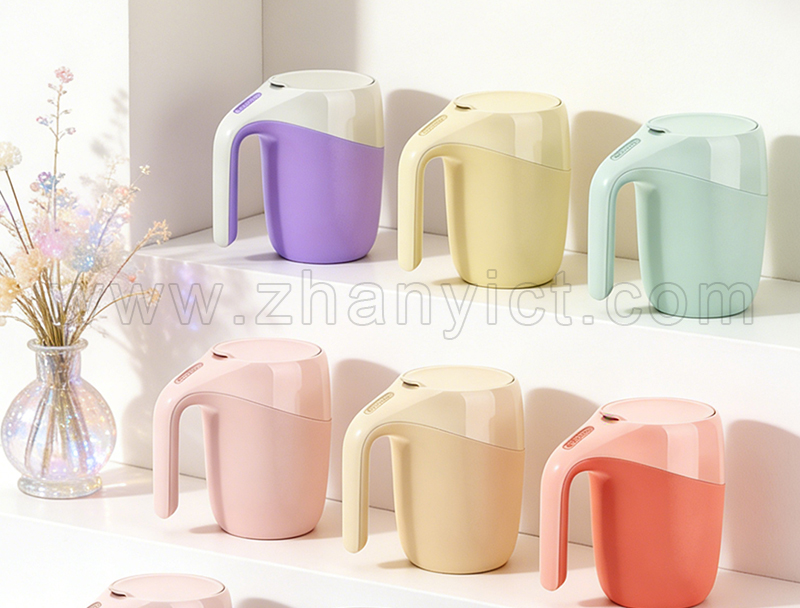
There are stories in the cup, life has warmth, use a good cup to enjoy a healthy life. We provide OEM business to more than 100 companies around the world, and produce more than 3 million pieces of various stainless steel/plastic cups and pots annually. Honoring promises, keeping reputation, ensuring quality and quantity, and delivering on time are our service principles and our professional commitment. Dongguan Zhan Yi Commodity Technology Co.,Ltd. welcomes global merchants to conduct on-site factory inspections and in-depth cooperation.