
The Birth Story of a Qualified Stainless Steel Insulated Cup (Part Two)
There are stories in the cup, and warmth in life. Hello everyone, "Dong Dong's Cup Talk" is here. https://www.zhanyict.com/en/ProductsDetail-VB-10521.htmlWith the increase in followers on my Xiaohongshu account "Dong Dong Talks Cups," I have received more and more inquiries from friends in the comments. However, I've noticed a common issue in these inquiries: most people focus on the undesirable aspects of the inner liner of newly purchased insulated cups, while very few raise concerns about other parts or accessories.
Today, I will explain in detail what a qualified insulated cup should look like. Beyond quality requirements for the inner liner, https://www.zhanyict.com/en/ProductsDetail-VB-10521.htmlwhat other standards should be met for other parts and accessories? Since there is a lot of information to share, I will break it down into multiple independent posts for everyone.
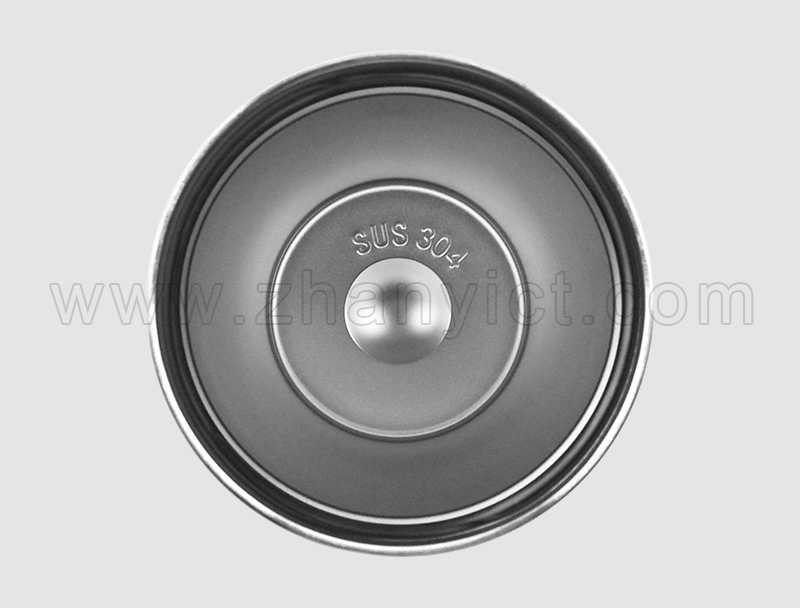
2. Inner Liner Requirements
Qualified Standards: The inner liner wall should be smooth, exhibiting the uniform metallic luster characteristic of 304 or 316 stainless steel. https://www.zhanyict.com/en/ProductsDetail-VB-10521.htmlThere should be no welding black spots or lines, no obvious scratches, no deep stamping swirl marks on the bottom, and the liner wall should be free of dents or deformations.
Negative Cases and Reasons for Return:
Case A: Black Spots/Lines from Welding on the Inner Liner.
Reason: These are oxidation defects caused by substandard welding processes (e.g., insufficient temperature or inadequate gas protection) when joining the liner body to the bottom.
Why It Fails: These black spots or lines are not merely cosmetic issues. https://www.zhanyict.com/en/ProductsDetail-VB-10521.htmlThey are evidence of excessive oxidation damage to the material, which can become breeding grounds for bacteria and shorten the cup's lifespan. Upon discovery, consumers are entitled to request a return or exchange.
Case B: Obvious Scratches on the Inner Wall.
Reason: Caused by foreign objects entering during production or improper operation of mechanical arms.
Why It Fails: Damages the passive film on the inner liner, https://www.zhanyict.com/en/ProductsDetail-VB-10521.htmlreducing its rust resistance. This constitutes a serious quality control failure, warranting a return or exchange.
Case C: Partial Blackening of the Inner Liner After Soaking.
Reason: During an acidic solution immersion test (e.g., with lemon water, coffee, or more severely, just water), https://www.zhanyict.com/en/ProductsDetail-VB-10521.htmlthe soaked area darkens or turns black, while the unsoaked area remains unchanged.
Why It Fails: This proves the inner liner material is substandard (possibly inferior 200-series stainless steel) or the surface passivation treatment has failed, rendering it unable to withstand the weak corrosion of daily beverages. https://www.zhanyict.com/en/ProductsDetail-VB-10521.htmlThis is explicitly prohibited by national standards (GB/T 29606-2013) as a failure to meet corrosion resistance requirements and necessitates a return or exchange.
There are stories in the cup, life has warmth, use a good cup to enjoy a healthy life. We provide OEM business to more than 100 companies around the world, and produce more than 3 million pieces of various stainless steel/plastic cups and pots annually. Honoring promises, keeping reputation, ensuring quality and quantity, and delivering on time are our service principles and our professional commitment. Dongguan Zhan Yi Commodity Technology Co.,Ltd. welcomes global merchants to conduct on-site factory inspections and in-depth cooperation.