
Unveiling the Truth About Dishwasher Testing for Exporting Water Bottles? Part 6
Every cup has a story, and life has its warmth. Hello everyone, welcome to "Dong Dong's Cup Talk" I’ve previously shared content about dishwasher testing for water bottles, but as it’s been a while, some of the earlier information no longer aligns with current standards due to improvements in craftsmanship and testing requirements. Recently, a friend reached out to me for help with a similar issue, so I invited Engineer Li, who has years of experience in spraying and printing technology at our factory, to share his insights. https://www.zhanyict.com/en/ProductsDetail-VB-10535.htmlThe following content is based on Engineer Li’s explanations, compiled by me. Due to the extensive information, I’ll break it down into separate articles. Additionally, as there is a lot of content, there might be some data inaccuracies during compilation. If you spot any, please feel free to message me, and I’ll correct them as soon as possible.
Six: Paint Not Up to Standard? Old Li’s "Solution Package"
Paint is more delicate, and the solutions need to be more detailed:
Step 1: Upgrade the Paint System
Primer: Epoxy primer must be used, as it offers the strongest adhesion. For special materials (such as PP plastic), a dedicated primer specifically designed for that material is essential.
Topcoat: "Twocomponent polyurethane paint" is highly recommended for its excellent chemical resistance and flexibility. https://www.zhanyict.com/en/ProductsDetail-VB-10535.htmlRemember, Component A (the hardener) and Component B (the main paint) must be thoroughly mixed in the ratio specified by the manufacturer and allowed to mature before spraying.
Step 2: Optimize the Spraying Line
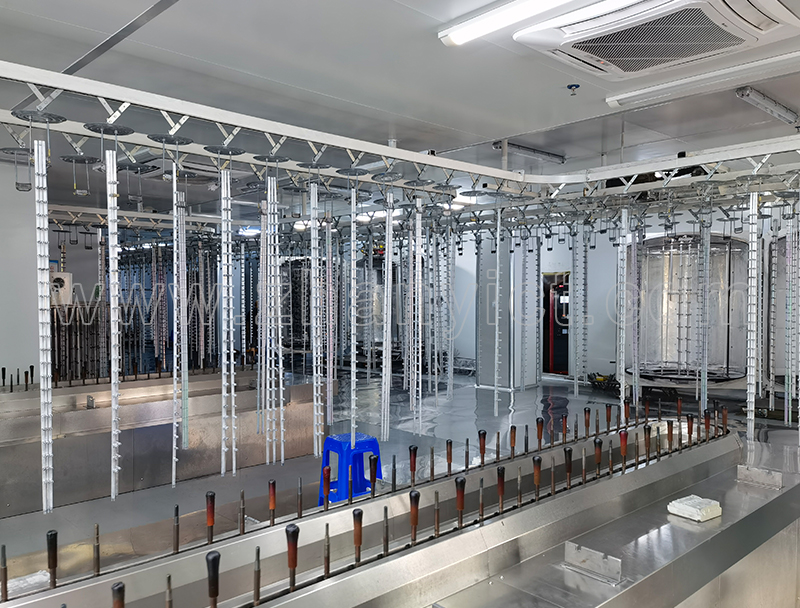
Cleanliness: The spraying environment must be dustfree, as even a single speck of dust can cause bubbling.
Uniformity: Adjust the spray gun’s air pressure and paint output to ensure an even coating. The recommended film thickness is between 2535μm.
Leveling and Curing: After spraying, allow sufficient leveling time (58 minutes) to eliminate orange peel. Curing conditions must be strictly adhered to. https://www.zhanyict.com/en/ProductsDetail-VB-10535.htmlPolyurethane paint typically requires baking at 80°C for over 30 minutes to ensure complete reaction.
Step 3: Introduce "Intermediate Sanding"
For cups with complex structures, after the primer has cured, lightly sand the surface with 800grit sandpaper to remove burrs and particles before applying the topcoat. This extra step significantly enhances the adhesion of the topcoat and the smoothness of the final appearance.
In our line of work, it’s a constant battle against issues. If your product fails the dishwasher test, don’t be discouraged—take it as an opportunity to identify and solve problems. By following the steps I’ve outlined, systematically troubleshooting and improving, https://www.zhanyict.com/en/ProductsDetail-VB-10535.htmlyour cups will surely pass the rigorous 20cycle "torture test" and earn your customers’ trust.
There are stories in the cup, and life has warmth. Choose a good factory to sell good water cups. We provide global OEM services for patented products and provide global OEM services with professional teams and high quality standards. Dongguan Zhan Yi Commodity Technology Co.,Ltd. specializes in highquality cup and kettle products. We are willing to serve you wholeheartedly.